Navigating the Hybrid Healthcare Landscape
The binary choice between "going to the doctor" and "logging on" has evaporated. Modern medicine is now a hybrid ecosystem. Telehealth, once a niche service for rural populations, now accounts for roughly 25% of all outpatient visits in the United States, according to McKinsey & Company data. It is an evolution of triage and chronic disease management that leverages high-definition video and remote patient monitoring (RPM).
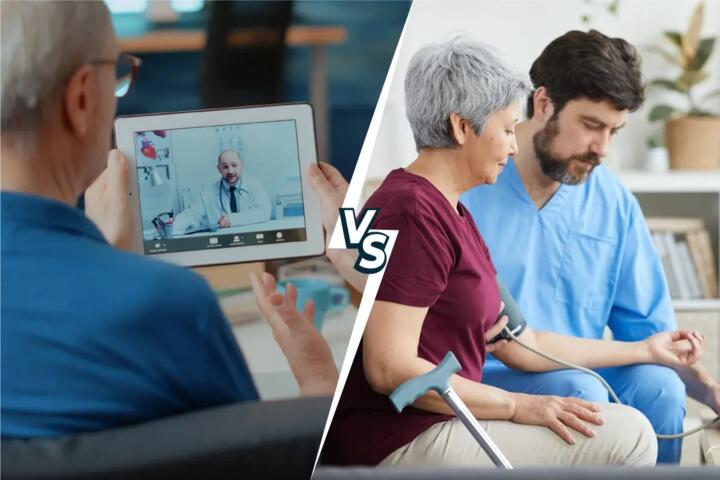
In clinical practice, this looks like a dermatologist using a high-resolution dermatoscope attachment on a smartphone to screen for melanoma, or a psychiatrist conducting a session via Doxy.me to observe a patient in their natural home environment. While the stethoscope remains a symbol of the profession, the digital interface has become its modern extension.
Statistically, the shift is profound. A study published in the Journal of the American Medical Association (JAMA) found that telehealth visits for mental health conditions surged by over 1,000% during the early 2020s and have maintained a steady plateau, proving that for certain specialties, the digital medium isn't just a backup—it’s the gold standard.
The Friction Points: Where Virtual and Physical Care Clash
The primary "pain point" in the current system is the misapplication of technology. Providers often attempt to force acute physical symptoms into a virtual box, leading to delayed diagnoses. For example, treating persistent abdominal pain via video is a high-risk maneuver; without palpation to check for "rebound tenderness," a clinician might miss an early-stage appendicitis.
Another significant failure is the "Digital Divide" in data integration. Patients use consumer-grade wearables like Apple Watch or Fitbit, but this data often lives in a silo, disconnected from the provider's Electronic Health Record (EHR) like Epic or Cerner. When a doctor can't see the continuous heart rate data during a virtual sync, the "tele" part of the visit loses its diagnostic edge.
The consequences are real: diagnostic momentum—the tendency to stick with a preliminary diagnosis without further testing—is higher in virtual settings for complex physical ailments. Real-world situations show that over-prescribing antibiotics for viral respiratory infections occurs more frequently in "urgent care" telehealth platforms compared to in-person clinics where a rapid strep test can be performed on-site.
Strategic Solutions for High-Impact Care
To maximize the benefits of both worlds, healthcare must be approached with a "Virtual First" mindset for triage and a "Physical First" mindset for intervention.
Implementing Remote Patient Monitoring (RPM)
Don't just talk to the patient; monitor them. Using platforms like Biofourmis or Dexcom for continuous glucose monitoring allows a physician to see 24/7 data trends rather than a single point-in-time snapshot.
-
Why it works: It replaces subjective patient reporting with objective longitudinal data.
-
Result: Research shows RPM can reduce hospital readmission rates for heart failure patients by up to 38%.
The "High-Touch" In-Person Experience
Reserve in-person slots for procedures, complex physical exams, and "difficult news" conversations. Use tools like Zocdoc to streamline the administrative burden of these visits so the actual face-time is dedicated to the patient, not paperwork.
-
Why it works: Human touch releases oxytocin and builds the therapeutic alliance, which increases treatment compliance.
-
Result: Patients who report a strong personal connection with their doctor are 2.5 times more likely to follow through with physical therapy or medication regimens.
Optimizing the Virtual Environment
Clinicians should use medical-grade peripherals. For instance, the Eko CORE digital stethoscope allows a doctor to listen to heart and lung sounds remotely with 40x amplification.
-
Why it works: It closes the "physical gap" of telehealth.
-
Result: High-fidelity remote auscultation can match the accuracy of in-person exams for 85% of common cardiac murmurs.
Mini-Case Examples: Results from the Field
Case 1: Chronic Hypertension Management
A mid-sized multi-specialty clinic transitioned 60% of its hypertension follow-ups to a telehealth-plus-RPM model using Omron wireless blood pressure cuffs.
-
Problem: High "no-show" rates for mid-day blood pressure checks.
-
Action: Provided patients with cellular-linked cuffs that automatically updated their charts.
-
Result: Patient adherence increased by 45%, and the clinic saw a 12% average reduction in systolic blood pressure across the pilot group within six months.
Case 2: Behavioral Health Integration
A regional health system integrated BetterHelp-style internal portals for their primary care patients.
-
Problem: Six-month wait times for in-person psychiatric evaluations.
-
Action: Launched a "Virtual Bridge" program for immediate video triage.
-
Result: Wait times dropped from 180 days to 72 hours. Emergency room visits for mental health crises decreased by 22% as patients received earlier intervention.
Comparison Matrix: Telehealth vs. In-Person Care
| Feature | Telehealth (Virtual) | In-Person (Physical) |
| Best For | Mental health, routine follow-ups, prescription refills, minor rashes. | Emergencies, new physical pain, vaccinations, biopsies, imaging. |
| Cost Efficiency | High (No travel, reduced overhead, lower "time away" from work). | Moderate (Facility fees, parking, travel costs). |
| Diagnostic Depth | Limited to visual and auditory cues + synced device data. | Full sensory (Palpation, percussion, olfaction, immediate lab work). |
| Patient Privacy | Dependent on patient’s home environment and HIPAA-compliant software. | Controlled clinical environment with standardized privacy protocols. |
| Accessibility | High for those with stable internet; low for those without tech literacy. | High for local residents; low for rural or disabled populations. |
Common Pitfalls and Tactical Fixes
Error 1: Treating Telehealth as a "Phone Call"
Many providers fail to optimize lighting and audio. If a patient can't see your facial expressions, trust erodes.
-
Advice: Use a dedicated external webcam (like a Logitech Brio) and a directional microphone. Position the camera at eye level to simulate "eye contact."
Error 2: Ignoring State Licensing Laws
In the US, "the practice of medicine occurs where the patient is located." Seeing a patient while they are on vacation in another state can lead to legal complications.
-
Advice: Use platforms like Wheel or SteadyMD that manage multi-state clinician credentialing to ensure you stay compliant.
Error 3: Failing to Set "Virtual Boundaries"
Patients often feel telehealth is "informal" and may be distracted or driving during the call.
-
Advice: Send a pre-visit checklist via Klara or Textline. State clearly that the patient must be in a private, stationary space for the visit to proceed.
FAQ: Key Insights for Patients and Providers
Is telehealth as effective as in-person care for chronic disease?
Yes, for conditions like Type 2 diabetes and hypertension, studies show equivalent or superior outcomes due to the increased frequency of "micro-touchpoints" and better data tracking through RPM tools.
How do I know if my symptoms require an in-person visit?
If you have "red flag" symptoms—shortness of breath, localized sharp pain, high fever, or any condition requiring a physical sample (blood, urine, tissue)—you must go in person. Telehealth is for "management," not "emergency investigation."
Are virtual visits cheaper?
For the patient, yes, when factoring in travel and lost wages. For providers, many insurers (like UnitedHealthcare or Aetna) now offer parity, meaning they pay the same rate for virtual and in-person visits, though this varies by state and contract.
What about the security of my medical data?
Professional platforms like Microsoft Teams for Healthcare or Zoom for Healthcare use end-to-end encryption. Avoid providers who suggest using standard FaceTime or Skype, as these may not meet strict HIPAA or GDPR standards.
Can a doctor prescribe medication via video?
In most cases, yes. However, certain "controlled substances" (like some ADHD medications or opioids) have strict federal and state regulations (such as the Ryan Haight Act in the US) that may require an initial in-person evaluation.
Author’s Insight: The Practitioner's Perspective
In my experience, the greatest "secret" of telehealth isn't the technology—it's the intimacy. When I see a patient via video, I see their living room, their pets, and their kitchen. This "social determinants of health" data is invisible in a sterile exam room. I once discovered why a patient’s asthma wasn't improving because I saw a moldy AC unit in the background of our call. My advice: use telehealth to see the context of a patient's life, and use in-person visits to treat the mechanics of their body. The most successful clinicians of the next decade will be those who can move fluidly between these two modes without losing their "clinical intuition."
Conclusion
To get the most out of modern healthcare, you must match the modality to the malady. Use telehealth for logistical efficiency, behavioral health, and data-driven chronic management. Reserve in-person care for diagnostic uncertainty and physical interventions.
Your next steps:
-
Audit your current health needs: If 80% of your visits are "talk-based," shift to a virtual-first provider like One Medical or Teladoc.
-
Invest in a "Home Health Kit": At minimum, own a digital thermometer, a reliable pulse oximeter, and a blood pressure cuff to make your virtual visits more "data-heavy."
-
Verify your insurance coverage for "Remote Patient Monitoring" codes to see if you can get reimbursed for your wearable devices.