Popular Articles

Security Monitoring Tools for IT Teams
Security monitoring tools help IT teams detect suspicious activity, investigate incidents, and meet audit requirements. This guide explains how monitoring works across logs, endpoints, networks, and cloud services, and where teams misread alerts. You’ll learn how to define detection goals, map data sources, size retention, test alert quality, and set response workflows. It also covers common mistakes, comparison checklists, and realistic case examples for planning and evaluation.
Tools

Data Backup and Recovery Tools
Data loss can happen unexpectedly due to hardware failures, cyberattacks, accidental deletion, or natural disasters, making a reliable backup and recovery plan essential for every organization. This article explores how modern data backup and recovery tools help businesses protect critical information, maintain business continuity, and restore systems quickly when problems arise. Designed for IT professionals, system administrators, and business leaders, it covers effective backup strategies, recovery planning, and the strengths of different backup solutions for various environments. Readers will also gain practical insights into common challenges, best practices, and real-world scenarios that demonstrate how the right recovery strategy can reduce downtime, minimize data loss, and improve overall resilience.
Tools

Time Tracking and Productivity Tools
Managing time effectively is one of the biggest challenges for professionals and organizations striving to stay productive in today's fast-paced work environment. Time tracking and productivity tools provide valuable insights into how work hours are spent, helping individuals and teams identify inefficiencies, eliminate distractions, and make smarter decisions about their daily routines. This article is designed for freelancers, managers, remote teams, and business owners who want to improve productivity without increasing their workload. It explores the features and benefits of modern time tracking solutions, explains how to interpret productivity data, and shares practical strategies, real-world examples, and best practices for optimizing workflows, reducing wasted time, and consistently achieving better results.
Tools
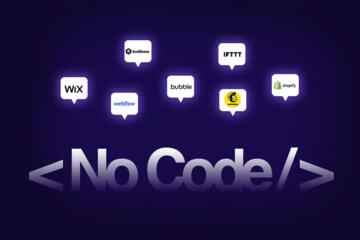
No-Code and Low-Code Tools Explained
No-code and low-code platforms make it possible to build apps, automate workflows, and connect data without needing years of coding experience. They can speed up delivery, lower development costs, and help business teams solve day-to-day problems without waiting in a long IT backlog. This article breaks down the real differences between no-code and low-code, when each option is a better fit, and the common traps to watch for - like shaky governance, security gaps, and tools that don’t scale. With practical tips and real-world examples, you’ll be able to pick the right platform and use it effectively.
Tools

Tools for Managing Hybrid Workforces
Hybrid workforces require specific tools that address communication gaps, track productivity across locations, and maintain security standards. This article explores software and methods used to manage teams split between offices and remote settings. It highlights pitfalls companies face and solutions proven by data, aiding decision-makers, HR leaders, and IT professionals handling mixed work environments.
Tools

AI Chatbots for Business Websites
Integrating intelligent conversational agents into commercial platforms has shifted from a luxury to a baseline requirement for maintaining competitiveness. This guide details how modern natural language processing (NLP) systems transform passive traffic into qualified leads and loyal customers. We examine the architecture, implementation strategies, and ROI metrics essential for a high-performing automated communication layer in today's digital landscape.
Tools

Reporting Tools for Executive Dashboards
Modern enterprise performance management relies on the seamless visualization of complex datasets into high-level strategic indicators. This article explores the architecture and selection criteria for high-end reporting systems designed specifically for C-suite decision-makers. We analyze how to bridge the gap between raw data lakes and actionable executive summaries, focusing on real-time accuracy, mobile accessibility, and the integration of diverse business intelligence streams into a single source of truth.
Tools

E-commerce Management Tools Explained
Managing a digital storefront today requires more than just a product list and a checkout button. As consumer expectations for omnichannel experiences rise, the backend complexity of inventory, order fulfillment, and customer data management scales exponentially. This article breaks down the essential software ecosystem required to synchronize supply chains with sales velocity, ensuring operational fluidity for high-growth merchants.
Tools

HR Management Tools for Scaling Companies
This guide provides a technical deep dive into building a scalable HR infrastructure for companies transitioning from mid-market to enterprise-level operations. We address the systemic friction caused by manual workflows, fragmented data, and decentralized recruitment processes that often paralyze growth. By implementing integrated Human Capital Management (HCM) systems and automated talent pipelines, founders and People Ops leaders can maintain cultural integrity while doubling or tripling their headcount without proportional increases in administrative overhead.
Tools

AI-Powered Forecasting Tools
Predictive intelligence is transforming how enterprises navigate market volatility by replacing static historical data with dynamic, real-time computational models. For supply chain managers, CFOs, and retail planners, these systems eliminate the "gut-feeling" bias that often leads to overstocking or missed revenue targets. By integrating diverse datasets—from macroeconomic shifts to granular consumer behavior—modern algorithmic forecasting allows organizations to pivot before market trends solidify, ensuring capital is deployed with surgical precision.
Tools