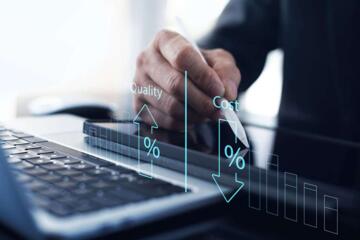
One of the most compelling advantages of remote accounting companies is their ability to reduce operational expenses significantly.

-
No need for in-house accounting staff – Eliminates salaries, benefits, and training costs.
-
Lower overhead costs – No expenses related to office space, equipment, or software licenses.
-
Pay-as-you-go pricing – Many firms offer flexible pricing models, allowing businesses to pay only for the services they need.
By leveraging remote accounting services, businesses can reallocate funds toward growth initiatives, marketing, or technology upgrades instead of maintaining a traditional accounting department.
2. Unmatched Scalability & Flexibility
Business needs fluctuate—seasonal peaks, rapid growth, or economic downturns all impact financial management requirements. Remote accounting firms provide scalable solutions that adapt to these changes seamlessly.
-
Easily adjust service levels – Scale up during tax season or audits, then scale back during slower periods.
-
No long-term commitments – Many remote firms offer month-to-month contracts, unlike traditional accounting hires.
-
Support for business expansion – Whether entering new markets or adding subsidiaries, remote accounting can handle increased complexity.
This flexibility ensures that businesses only pay for what they need, when they need it, without being locked into rigid contracts.
3. Access to Global Expertise & Specialized Skills
Unlike local accounting firms, remote providers tap into a worldwide talent pool, giving businesses access to highly skilled professionals with niche expertise.
-
Industry-specific knowledge – Whether in e-commerce, healthcare, or manufacturing, remote accountants often specialize in particular sectors.
-
Advanced certifications – Many remote firms employ CPAs, tax strategists, and financial analysts with top-tier qualifications.
-
Multilingual & multi-region support – Essential for businesses operating in global markets with varying compliance requirements.
This level of expertise ensures higher accuracy, strategic financial planning, and regulatory compliance—advantages that might be costly or difficult to find locally.
4. Enhanced Data Security & Compliance
Financial data is highly sensitive, and security breaches can be devastating. Reputable remote accounting companies invest heavily in cutting-edge cybersecurity measures to protect client information.
-
Encrypted data storage & transmission – Ensures sensitive financial records are secure.
-
Regular security audits – Proactively identifies and mitigates vulnerabilities.
-
Compliance with global standards – GDPR, SOC 2, HIPAA, and other regulatory frameworks.
Additionally, remote accounting firms stay up-to-date with changing tax laws and financial regulations, reducing the risk of non-compliance penalties.
5. Time-Saving Automation & Advanced Technology
Manual bookkeeping is tedious and prone to errors. Remote accounting firms leverage AI-driven automation and cloud-based accounting software to streamline processes.
-
Automated invoicing & payment reminders – Improves cash flow management.
-
AI-powered expense categorization – Reduces manual data entry.
-
Real-time financial dashboards – Provides instant insights into profitability, expenses, and tax obligations.
By automating repetitive tasks, businesses can free up valuable time to focus on strategy, customer engagement, and revenue growth.
6. Improved Business Continuity & Disaster Recovery
Natural disasters, cyberattacks, or even local office closures can disrupt financial operations. Remote accounting firms provide cloud-based solutions that ensure uninterrupted access to financial data.
-
24/7 data availability – Access financial records anytime, anywhere.
-
Automated backups – Prevents data loss due to hardware failures or ransomware.
-
Seamless team collaboration – Multiple stakeholders can review reports without physical document sharing.
This resilience is especially valuable for small businesses that may lack robust in-house IT infrastructure.
7. Strategic Financial Insights & Business Growth Support
Beyond basic bookkeeping, remote accounting firms offer high-level financial analysis to drive smarter business decisions.
-
Cash flow forecasting – Predict future financial health and liquidity needs.
-
Tax optimization strategies – Identify deductions and credits to minimize liabilities.
-
Custom KPI tracking – Monitor business performance metrics in real time.
These insights empower business owners to make data-driven decisions, secure funding, and optimize profitability.
Conclusion: The Future of Accounting is Remote
Remote accounting companies are revolutionizing financial management by combining cost efficiency, scalability, top-tier expertise, and advanced technology. In an era where agility and digital transformation are critical, outsourcing accounting functions to a remote firm allows businesses to:
✔ Reduce costs without sacrificing quality
✔ Access specialized skills on demand
✔ Enhance security & compliance
✔ Save time through automation
✔ Gain strategic financial insights
For businesses looking to stay competitive in a fast-paced economy, partnering with a remote accounting firm is no longer just an option—it’s a strategic advantage.
Is your business ready to transition to remote accounting? Explore top-rated firms today and discover how you can optimize your financial operations for long-term success.