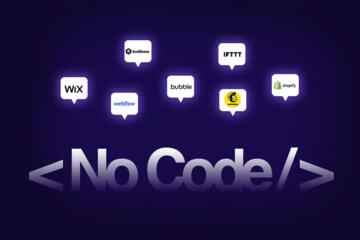
Beyond the Buzzword: Understanding Modern Workflow Automation
At its core, workflow automation is the practice of mapping out a business process and using software to execute the steps without manual intervention. It is the "if-this-then-that" logic applied to enterprise-scale problems. Think of it as a digital conveyor belt; when a customer signs a contract in DocuSign, the software automatically creates a folder in Google Drive, pings the Slack channel, and generates an invoice in QuickBooks.

In a professional services context, this might look like an automated onboarding sequence. Instead of a project manager spending four hours sending emails and setting up permissions, a single trigger (the signed contract) handles the heavy lifting. According to a McKinsey report, roughly 60% of all occupations have at least 30% of constituent activities that could be automated. This isn't about replacing humans; it’s about removing the "robotic" work from human roles.
Real-world efficiency isn't just a theory. Gartner suggests that by 2025, organizations that use automation to redesign processes will lower operational costs by 30%. This transition shifts your team’s focus from "data entry" to "data analysis."
The High Cost of Manual Friction: Why Standard Processes Fail
The most significant pain point in modern business is the "Manual Data Bridge." This happens when an employee copies information from an email and pastes it into a spreadsheet. It feels like work, but it is actually a high-risk liability. One typo in a budget sheet can result in thousands of dollars in overspending.
Another critical failure is "Information Silos." When the marketing team uses HubSpot and the sales team uses Salesforce, but they don't talk to each other automatically, leads fall through the cracks. The delay between a user filling out a form and a salesperson receiving a notification is often the difference between a conversion and a bounce.
The consequences are measurable. Research indicates that employees lose roughly 2.1 hours per day to "context switching" and searching for information across fragmented apps. This leads to burnout, high turnover, and a culture of "firefighting" rather than proactive growth.
Strategic Solutions: Implementing Robust Automation Frameworks
To fix these issues, you must move beyond simple task automation and toward Business Process Automation (BPA). Here is how to execute this effectively:
Audit for "High-Volume, Low-Complexity" Tasks
Focus on tasks that happen daily and require zero emotional intelligence.
-
The Fix: Use process mining tools or simple time-tracking data (like Toggl) to identify where teams spend the most "mindless" time.
-
The Result: A mid-sized agency found that automating their lead-to-cash pipeline saved 15 hours per week, equivalent to nearly $50,000 in saved labor costs annually.
Leverage iPaaS for Cross-Platform Connectivity
Don't rely on native integrations, which are often limited. Use Integration Platform as a Service (iPaaS) providers to build custom bridges.
-
The Fix: Use tools like Make (formerly Integromat) or Zapier to connect disparate systems. For complex, enterprise-level logic, Workato or MuleSoft offer deeper governance.
-
The Practice: If a high-value ticket is opened in Zendesk, the system should check the customer's lifetime value in Snowflake and instantly escalate it to a Senior Success Manager via Microsoft Teams.
Implement Human-in-the-Loop (HITL) Logic
Automation shouldn't be "set it and forget it."
-
The Fix: Build "Approval Gates." The software does 90% of the work, then pauses for a human to click "Approve" before final execution.
-
Tools: Power Automate is excellent for this within the Microsoft ecosystem, allowing for "Approval" buttons directly within Outlook.
Real-World Impact: Mini-Case Studies
Case Study 1: E-commerce Logistics Scalability
-
The Company: A direct-to-consumer apparel brand.
-
The Problem: During peak seasons, the team spent 20 hours a week manually updating inventory levels across Shopify, Amazon, and their warehouse management system (WMS).
-
The Solution: Implemented Celigo to sync inventory in real-time. Added a logic branch: if stock falls below 10%, automatically trigger a "Low Stock" Slack alert to the procurement team.
-
The Result: 0% overselling rate during Black Friday and a 100% reduction in manual data entry for the logistics coordinator.
Case Study 2: Legal Firm Document Generation
-
The Company: A boutique law firm specializing in real estate.
-
The Problem: Drafting standard purchase agreements took 45 minutes per client, with frequent errors in client names and addresses.
-
The Solution: Used PandaDoc integrated with Clio. A simple web form filled out by the client automatically populated the legal template.
-
The Result: Document creation time dropped to 5 minutes. Accuracy reached 100%, and the firm was able to handle 3x more clients without hiring more paralegals.
Automation Tool Comparison: Finding Your Fit
| Software Category | Primary Tools | Best For | Key Advantage |
| No-Code/SMB | Zapier, Make | General task linking | Massive library of 5,000+ apps |
| Enterprise iPaaS | Workato, MuleSoft | Complex data mapping | Advanced security and governance |
| Ecosystem-Specific | Power Automate, Tray.io | Microsoft/AWS users | Deep native integration |
| Document/Legal | PandaDoc, Ironclad | Contracts and Signatures | Legal-grade compliance & templates |
| Project Workflows | Monday.com, Asana | Internal team processes | High visibility and UX |
Common Pitfalls: Why 50% of Automation Projects Fail
The biggest mistake is "Automating a Broken Process." If your manual process is inefficient, automating it just makes you inefficient faster. You must optimize the workflow on paper before touching the software.
Another error is "Over-Engineering." Trying to account for every 1% edge case in an automated workflow makes the logic brittle. If the automation becomes too complex, it breaks easily when an app updates its API. Stick to the 80/20 rule: automate the 80% of standard cases and let humans handle the 20% of exceptions.
Finally, ignore "Shadow IT" at your peril. When different departments buy their own automation tools without IT oversight, you create security vulnerabilities and redundant costs. Centralize your automation strategy to ensure data privacy (GDPR/SOC2) compliance.
Workflow Automation FAQ
What is the difference between RPA and Workflow Automation?
Robotic Process Automation (RPA), like UiPath, mimics human actions on a screen (clicking buttons, scraping text). Workflow automation, like Zapier, uses APIs to talk directly between software servers. RPA is better for legacy systems without APIs; Workflow Automation is faster and more stable for modern cloud apps.
Is workflow automation expensive for small businesses?
No. Many tools offer "freemium" tiers. You can start with $20–$50 per month. The ROI is usually realized within the first 30 days through time saved.
Do I need to know how to code?
Most modern tools are "Low-Code" or "No-Code," using visual drag-and-drop interfaces. However, understanding basic logic (if/and/or) and how data structures work (JSON) is highly beneficial.
How do I ensure my data is secure during automation?
Choose tools with SOC2 Type II, HIPAA, or GDPR compliance. Ensure you use "Least Privilege" access, giving the automation tool only the specific permissions it needs to function.
Can automation replace my employees?
Automation replaces tasks, not jobs. It allows your employees to move from "data movers" to "decision makers," which usually increases job satisfaction and reduces burnout.
Author’s Insight: The "Automation-First" Mindset
In my years of consulting on digital transformation, I’ve noticed the most successful companies don't just "fix" problems with automation; they build with an "automation-first" mindset. Before any new software is purchased, they ask: "Does this have an open API?" If it doesn't, it’s a non-starter. My best advice for 2026 is to stop looking for a "silver bullet" tool. Instead, focus on building a clean data architecture. Once your data is structured, the automation tools almost run themselves. Start small—automate one single, annoying task today—and the momentum will follow.
Conclusion
Workflow automation is no longer a luxury for tech giants; it is the baseline for operational survival. To begin, audit your team's weekly schedule and identify the "copy-paste" loops. Choose a user-friendly connector like Make or Zapier, and build a simple three-step pilot project. Once you prove the ROI of 5–10 hours saved per week, you can scale to more complex enterprise integrations. Prioritize data cleanliness and process mapping above all else. Focus on the bottlenecks that slow down your revenue-generating activities, and you will see a direct impact on your bottom line.